The Path of Prayer
The life of faith is frequently described as a journey. The Second Vatican Council speaks of Mary travelling the “pilgrimage of faith”. The concept of a journey gives a good illustration of the changes of vision that occur with the growth or diminishment of our relationship with God. In any journey, the landscape changes as we travel along. The changing scenery in the life of faith that are described in various spiritual texts parallels the changes in the traveler’s mind and heart and soul. The adventures encountered on the journey of faith correspond to the challenges, either accepted or refused, in this attempt to come closer to God. Whatever one can say about the spiritual life, it is not boring.
That is, it is not boring except to those who refuse it.
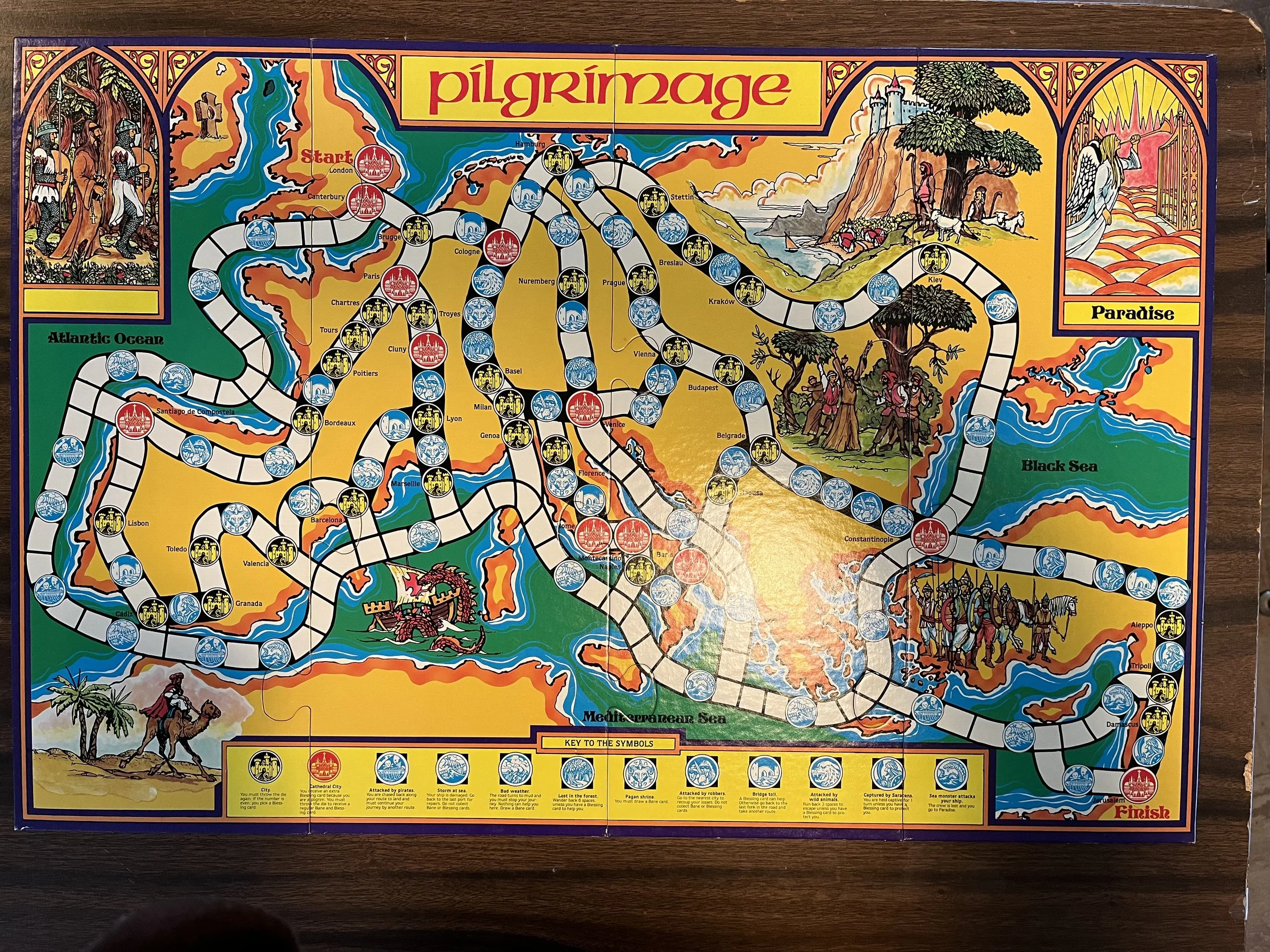
For those who accept the challenge, it has all the excitement of the most riveting thriller! We see this in Dante’s Divine Comedy, as the hero journeys through Hell, up Mount Purgatory and into the heavenly radiance of the Empyrean. We also savor it as we travel with John Bunyan’s Christian through the Slough of Despond and up Hill Difficulty, sharing in his battle with Apollyon and are welcomed with him to the Celestial City. The stories are thrilling but the reality for those who persevere in it, is even more so.
This may sound odd, given what we hear and read about “dark nights of the soul”, but every adventure has its frightening moments. The night is dark but it can be thrilling because as one writer pointed out, “We see farther in the night than we do in the day because in the day the farthest we can see is the sun, but in the night, we see immeasurably farther, for we see the stars”. This is true also of the darknesses that we encounter in the interior journey of faith, for in the dark nights of the soul our spiritual eyes are trained to see the light of faith shining in the darkness.
The journey of faith leads through the heart of each one of us, and that is a unique path that no one else can tread, but it us not an unknown path. Each traveler is unique, but we all share the same human nature. For this reason, the journey of faith has much that is familiar to all who travel it. We all face the same challenges, though they will differ in their details. We all have the same weaknesses that flow from original sin, and we all have the same aids that are God’s moments and gifts of grace.
Because we all have these shared realities, the Catholic Church has over the centuries mapped out a common path for those who accept to undertake the journey of faith. Through her mystics and theologians and pray-ers, the Church has found that the journey of faith contains three stages that go from the beginning all the way through to union with God as much as it is possible in this life.
The names of these three stages vary. One nomenclature calls them the stage of beginners, the stage of proficients and the stage of the perfect. Another set of names calls them the purgative stage, the illuminative stage and the unitive stage. The names can confuse and easily frighten away ordinary people who simply want to deepen their prayer life and come closer to God. For myself, I call them the stage of self-knowledge, the stage of knowledge of God, and the stage of trust in God. We will look more closely at these three stages in our further considerations.